🤓 Fractal Music, even NERDS make music
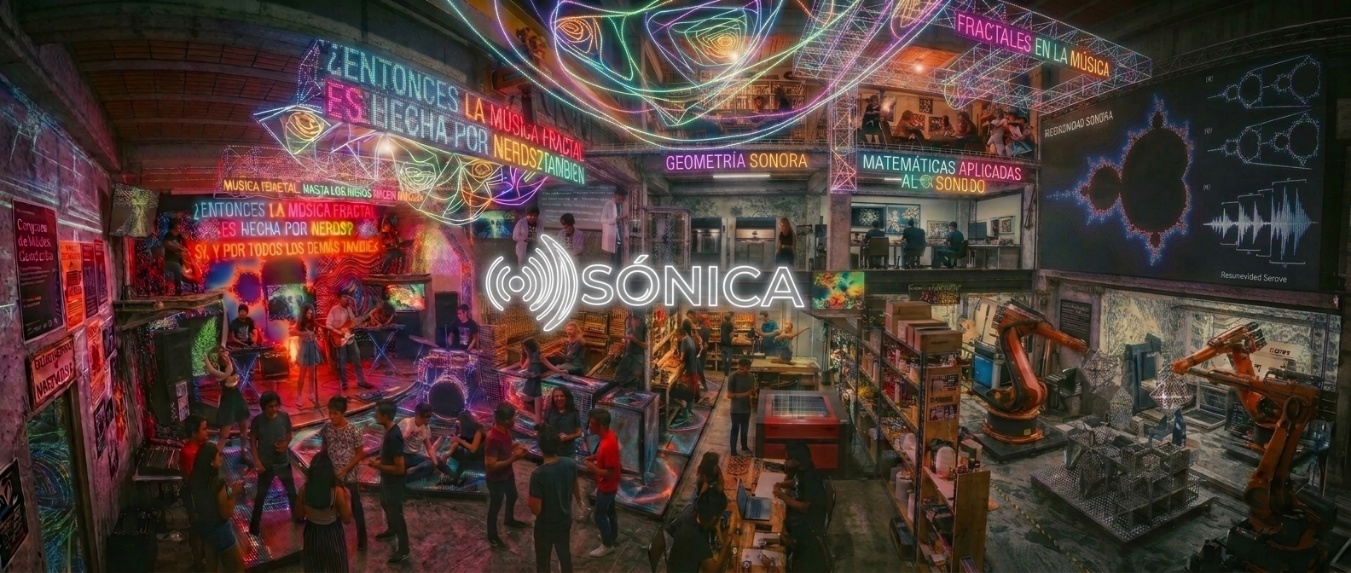
Spoiler Alert: This post is super nerdy, consume at your own risk 😊
If you thought mathematicians were only good for splitting the bill at the taco stand or failing high schoolers, think again. Turns out the biggest geeks in class have been meddling with music for centuries, but with fractal music, they took things to a whole new level. There is no heartbreak inspiration here; it is pure equations turned into rhythm.
What the hell is a fractal?
A fractal is a geometric shape that repeats itself into infinity. If you zoom in on a corner, it looks exactly like the whole image. Think of broccoli: if you cut off a tiny little floret, it looks like a miniature broccoli. Nature is full of them, from snowflakes to ferns.
And how does music fit into this? Easy: you translate those infinite repetition formulas into notes, rhythms, and melodies.
Instead of composing by ear, a mathematician takes a numerical pattern and assigns rules to it: "every time the equation equals 2, play a C; when it goes back up, speed up the tempo." The result is structures where the main melody repeats at a macro and micro scale at the same time.
The DNA of mathematics in the score
The relationship between numbers and sound is not new. Pythagoras was already measuring lyre strings before it was cool. However, fractal music uses specific concepts to build songs:
- Self-similarity: A short musical motif repeats within the larger melody, but at a different speed or in different octaves.
- 1/f Noise (Pink Noise): The perfect balance between predictability and chaos. Commercial music follows this pattern without knowing it: neither so boring that it puts you to sleep, nor so chaotic that it sounds like an old blender.
- Recursive algorithms: Mathematical formulas that feed on their own result to create the next measure.
Examples to train the ear
To keep it from being just chalkboard theory, here are some clear cases where fractals and mathematics turned into audio tracks:
Johann Sebastian Bach – Canon by Augmentation: Bach was a nerd of his time without even knowing what a fractal was. In his canons, one voice plays the main melody while another voice plays the exact same sequence, but twice as slow. It is pure self-similarity on the staff.
Harlan Brothers – Mandelbrot Music: Modern composers who directly use the coordinates of the Mandelbrot Set (one of the most famous fractal equations) to map sound frequencies. It is like listening to the graph of a function.
György Ligeti – Etudes for Piano: This Hungarian composer was explicitly inspired by fractal geometry and African rhythms to create hyper-complex piano pieces where multiple rhythms at different scales advance simultaneously.
Generative sound algorithms (MusiNum): Software tools where you enter a mathematical equation and the program spits out a complete piece of fractal ambient music.
Next time you hear a song with a beat that hooks you without knowing why, remember there is probably a fractal structure behind it tickling your brain.
Personal Note
NERDS RULE !!!