🐂 From the can to the stage: Red Bull and its musical masterstroke
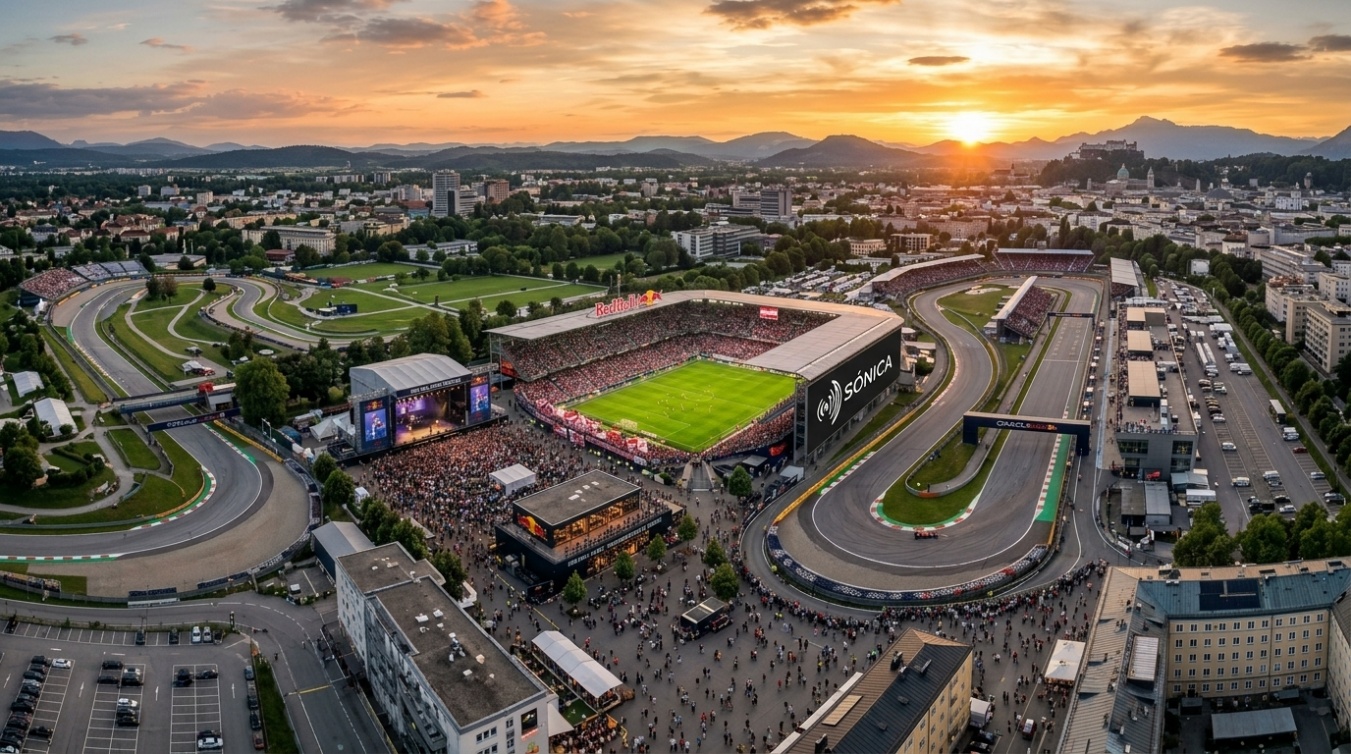
If you think of Red Bull, a red bull, a silver can, and someone skydiving from the stratosphere surely come to mind. But the brand's true magic doesn't just happen in the air or on the racetracks; they have built it on a massive scale within the music industry.
Far from forcing their logo into third-party concerts, they decided to build their own sound empire from scratch. And not as an overbearing sponsor, but as a genuine ally of the scene.
From the Can to the Stage
The Secret Formula
In the late 90s, when many brands were merely paying to put banners with their name at festivals, Red Bull asked themselves: "What if we create a space for musicians to come, learn, and collaborate?"
That is how the Red Bull Music Academy was born in 1998. For two decades, it brought together young talent and music legends in different cities around the world. It wasn't about selling drinks, but about locking producers, singers, and DJs in incredible studios to create new things without the pressure of a record label on their backs.
The Batallas de los Gallos: The Cradle of Freestyle
If there is one domain where they completely crushed it, it is urban culture. In 2005, they launched the "Red Bull Batalla de los Gallos," known today simply as Red Bull Batalla.
Back then, Spanish-language freestyle was underground, rooted in public squares and parks. Red Bull provided the stage, professional sound, streaming, and the respect the discipline deserved. Thanks to this, improvised rap went from street corners to filling arenas like the WiZink Center or Luna Park, launching the careers of names that dominate global charts today.
Recording Studios and Festivals with Personality
It didn't stop there. They built a network of Red Bull Studios around the world (from Tokyo to London or Los Angeles), equipped with cutting-edge technology so emerging artists could record for free.
Additionally, their festivals and formats like Red Bull Culture Clash pitted different collectives and musical genres against each other in front of the audience, always prioritizing creativity and authentic celebration over traditional marketing.
And Why Did It Work So Well?
- Authenticity: They understood the culture before trying to sell anything to people.
- Real Support: They gave tools (studios, stages, reach) to artists who genuinely needed them.
- Patience: They bet on long-term community development instead of chasing quick advertising impact.
Red Bull managed to prove that a brand can be an active part of musical culture without ruining it. They energized an entire generation of creators who changed the rules of the game.
And if what they did in music already seemed impressive, their entry into sports shows that their success is not luck, but a perfectly calculated method. Red Bull does not sponsor teams; it buys structures, transforms them from the root, and sets them up to compete at the highest level.
On the Track
Absolute Dominance in Formula 1
In 2004, the brand bought the Jaguar team, and everyone thought it was an advertising whim to sell cans. They were wrong.
Oracle Red Bull Racing: They signed design genius Adrian Newey and built a winning machine. They dominated F1 with Sebastian Vettel (four consecutive titles between 2010 and 2013) and returned to the top with Max Verstappen.
RB (formerly Toro Rosso and AlphaTauri): They bought Minardi in 2005 to create a "sister team." Its main role has been serving as a pipeline to test and refine young drivers before they make the leap to the main team.
On the Pitch
The Multi-Club Model That Revolutionized Football
In football, they didn't look for Real Madrid or Manchester United to put their logo on the shirt. They preferred acquiring small or lower-division clubs to shape them under their own philosophy: dynamic football, high pressing, and scouting young talent.
RB Leipzig (Germany): The most ambitious project. They took a fifth-division club in 2009 and, in just eight years, brought it to the Bundesliga and to compete in the UEFA Champions League.
Red Bull Salzburg (Austria): The development hub in Europe. World-class talent like Erling Haaland and Sadio Mané emerged from here.
New York Red Bulls (USA) and Red Bull Bragantino (Brazil): They expanded the model to the Americas, turning Bragantino into a competitive club in the elite of South American football.
The Key to Success: The Talent Network
Just as they did with recording studios for musicians or the platform for freestylers, they created an interconnected network in sports. A player or driver can start at their academies in South America or Europe and climb within the brand's own structure all the way to the top of the world.