|
|
🥩 The banned Beatles album cover: "The Butcher Scandal"
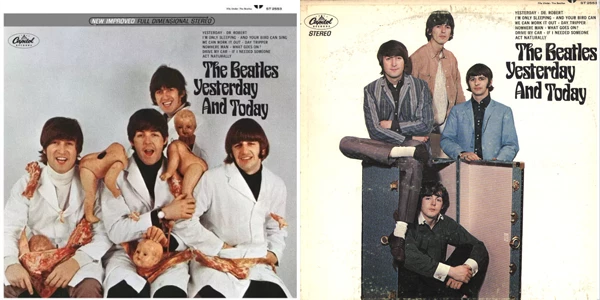
The story behind the Yesterday and Today (1966) cover is easily one of the most wild moments of Beatlemania. It marked a huge turning point, breaking the band away from their "clean-cut boy next door" vibe and showing their growing itch for experimentation and dark satire. Here is the backstory, the concept, and the massive outrage it sparked. The Origin: The "Butcher Cover"The original photo, shot by Robert Whitaker on March 25, 1966, featured all four Beatles dressed in white butcher coats, draped in raw meat and chopped-up plastic doll parts. The Art ConceptWhile most people thought it was just a protest, Whitaker had something else in mind: - Mocking celebrity status: Whitaker wanted to create a piece of conceptual art (a triptych) to prove that the Beatles were just flesh and blood, not gods.
- Surrealist vibes: The photographer was heavily inspired by surrealism (especially Salvador Dalí) and Hans Bellmer’s eerie doll work.
- The Beatles' take: John Lennon and Paul McCartney fully backed the photo. Lennon even claimed it was a protest against the Vietnam War, while McCartney said it was their way of breaking out of their boring, predictable image.
The Backlash and CensorshipWhen the album was shipped to record stores and DJs in June 1966, people completely lost their minds. Back then, an artist's image was kept squeaky clean, so seeing teen idols surrounded by "decapitated baby dolls" and raw meat was way too much for American society to stomach. - Massive recall: After getting flooded with complaints from retailers who flat-out refused to stock it, Capitol Records pulled all 750,000 copies that had already been printed.
- The cover-up operation: Destroying every single copy would’ve cost a fortune. So, to save cash, Capitol decided to just slap a new, totally harmless photo (the band posing around a trunk) right over the butcher cover.
The "Song Butchering" MythOne of the most famous fan theories (even though Whitaker denied it) was that the cover was a quiet middle finger to Capitol Records. In the US, the record label used to regularly "hack up" the original UK albums, stripping out songs to hold them back for future releases so they could sell more records with less tracks. Legend has it that the Beatles handed over the photo as a subtle way of saying: "You guys are butchering our music, so here we are butchering dolls." A Holy Grail for CollectorsBecause of that hasty cover-up job, collectors today look for three specific "states" of the album: State | Description | Estimated Value | First State | Original copies that were never glued over or tampered with. | Crazy high (can go way over $20,000 USD) | Second State | Copies with the "trunk cover" pasted right over the butcher shot. | High (you can actually spot the butcher outline peeking through) | Third State | Copies where the owner tried to peel off the top layer. | Depends on how clean the peel job was |
|
|

|

|

|
|